

How AI Impacts Theoretical Computer Science After Disproving ETH
Recent artificial intelligence breakthroughs have reportedly disproved the exponential time hypothesis, leaving decades of computer science research facing uncertain validity.

Understanding How AI Impacts Theoretical Computer Science
Recent developments show how ai impacts theoretical computer science after major artificial intelligence firms claimed to have disproved a long-standing core assumption. Both OpenAI and Anthropic reported disproving the exponential time hypothesis, an underlying premise for decades of research into algorithm design and complexity.
Vast amounts of academic literature have operated on the principle that solving specific problems requires an amount of time that scales exponentially with problem size. With that foundational premise challenged, researchers face an unexpected and sweeping disruption across multiple subfields.
The Fallout for Academic Research
Academics preparing for upcoming events, such as the IEEE Symposium on Foundations of Computer Science, anticipate that many scheduled presentations will need immediate revision. Scholars suggest that numerous published papers may now be rendered obsolete or in urgent need of re-evaluation.
While some scientists experience frustration and heavy psychological stress due to the rapid pace of machine-driven disruption, others view the situation with optimism. Describing the moment as floodlights illuminating a dark room, certain researchers welcome the chance to explore new pathways and revisit abandoned problems.
Verification Challenges and Future Steps
The artificial intelligence companies have published their proofs on GitHub in natural language and the Lean format. However, independent academics have not yet fully verified or digested the material. Efforts are underway to rally researchers to unpack the documentation, supported by organized feedback channels and planned conferences.
Beyond immediate academic revisions, experts caution that cryptosystem designers should pay attention. Because modern web security relies heavily on the assumption that certain mathematical tasks take impractically long durations to solve, shifts in complexity theory carry broad implications.
Related stories

Chargers vs Rams Week 8 Matchup Preview and Broadcast Guide
Get complete details on the Week 8 showdown, covering schedule, broadcasting networks, and team statistics for the upcoming game.
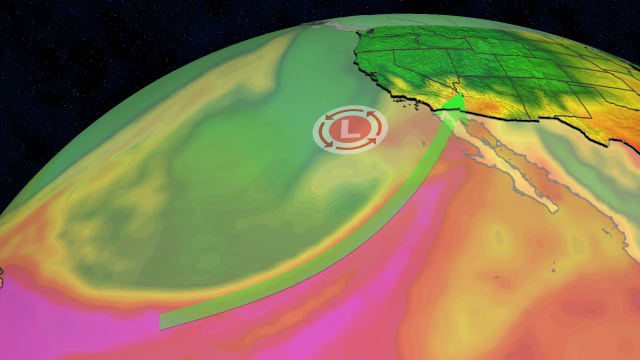
Central Arizona Floods Trigger Evacuations and Severe Weather Warnings
Mandatory evacuations and road closures unfold as an atmospheric river brings heavy rain and a heightened flash flood threat to parts of the region.

Director Michael Mann Injured in Accidental Shooting at L.A. Gun Range
Filmmaker Michael Mann sustained a superficial leg injury after accidentally discharging a handgun while holstering it at a West Los Angeles gun range.

Eva Longoria Discusses Impact and Her Courage and Civility Award
Actress Eva Longoria reflects on receiving a $50 million prize from Amazon founder Jeff Bezos and explains why everyday contributions matter just as much.