

NASA-Funded Study Confirms Teghaza 001 Is a 4.1-Billion-Year-Old Martian Meteorite
Scientists have confirmed that an 800-gram pink rock found in the Sahara Desert is a 4.1-billion-Year-old piece of Mars, offering new insights into the planet's ancient crust.
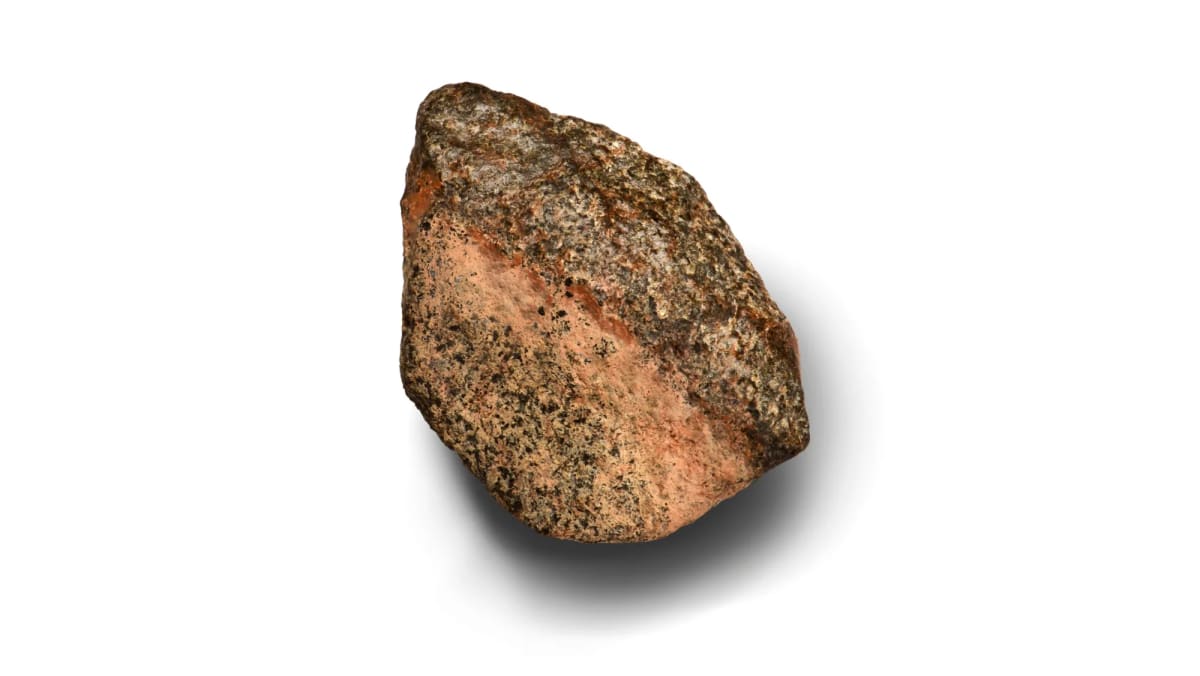
Discovery of an Ancient Martian Meteorite in the Sahara
NASA-funded researchers have officially confirmed that an 800-gram pink rock discovered in the Sahara Desert is a rare 4.1-billion-year-old martian meteorite. Designated as Teghaza 001 after the Malian salt plain where it was located, the specimen provides scientists with a unique and unprecedented glimpse into the geological history of the Red Planet.
While approximately 435 meteorites from Mars have been identified on Earth, this nearly 2-pound sample stands out due to its extreme age and distinct composition. Researchers published their initial findings in the journal Science, detailing how the rock preserves a snapshot of ancient crust formation.
Unlocking Secrets of the Ancient Martian Crust
Unlike other ancient Martian rocks found previously—such as ALH84001, which is composed almost entirely of a single mineral—Teghaza 001 contains a diverse mixture of volcanic minerals. Scientists used an innovative, in-situ rubidium-strontium age-dating technique on a tiny fragment of the sample to precisely determine its age and timeline of alteration.
Analysis revealed that subsurface water interacted with the rock roughly 4.1 billion years ago, suggesting the sample formed even earlier. The unique mineralogy of the meteorite closely matches data collected by NASA's Mars Reconnaissance Orbiter in the cratered southern highlands of Mars, marking the first time scientists have a crust sample from this specific region.
Future Studies and Planetary Insights
Although the exact point of origin on Mars will likely never be known, the chemistry and texture locked inside the rock's zircon crystals hint at a dynamic early water cycle. Researchers hope that ongoing analysis of this invaluable sample will shed light on how water and rocks interacted on early Mars, and potentially preserve an imprint of the planet's ancient atmosphere as it lost water.
Sources: NASA (.gov), The New York Times, The Times of India.
Frequently asked questions
When and where was the meteorite found?
How old is the Teghaza 001 meteorite?
How do scientists know it is from Mars?
What makes this meteorite unique compared to others?
Related stories

Eva Longoria Discusses Impact and Her Courage and Civility Award
Actress Eva Longoria reflects on receiving a $50 million prize from Amazon founder Jeff Bezos and explains why everyday contributions matter just as much.

USC Upsets Ohio State 30-18 to Keep College Football Playoff Hopes Alive
USC secured a major victory over No. 2 Ohio State with a 30-18 upset, reviving their College Football Playoff aspirations under head coach Lincoln Riley.

Four Dead and Fifteen Wounded Following Deep Ellum Shooting in Dallas
Four people were killed and 15 others injured during a series of violent incidents in the Deep Ellum neighborhood of Dallas over the Halloween weekend.

How Natalie Nakase Guided the Golden State Valkyries to a WNBA Title
Natalie Nakase has led the Golden State Valkyries to a WNBA championship in just their second season, making history as the fastest expansion team to win a title.