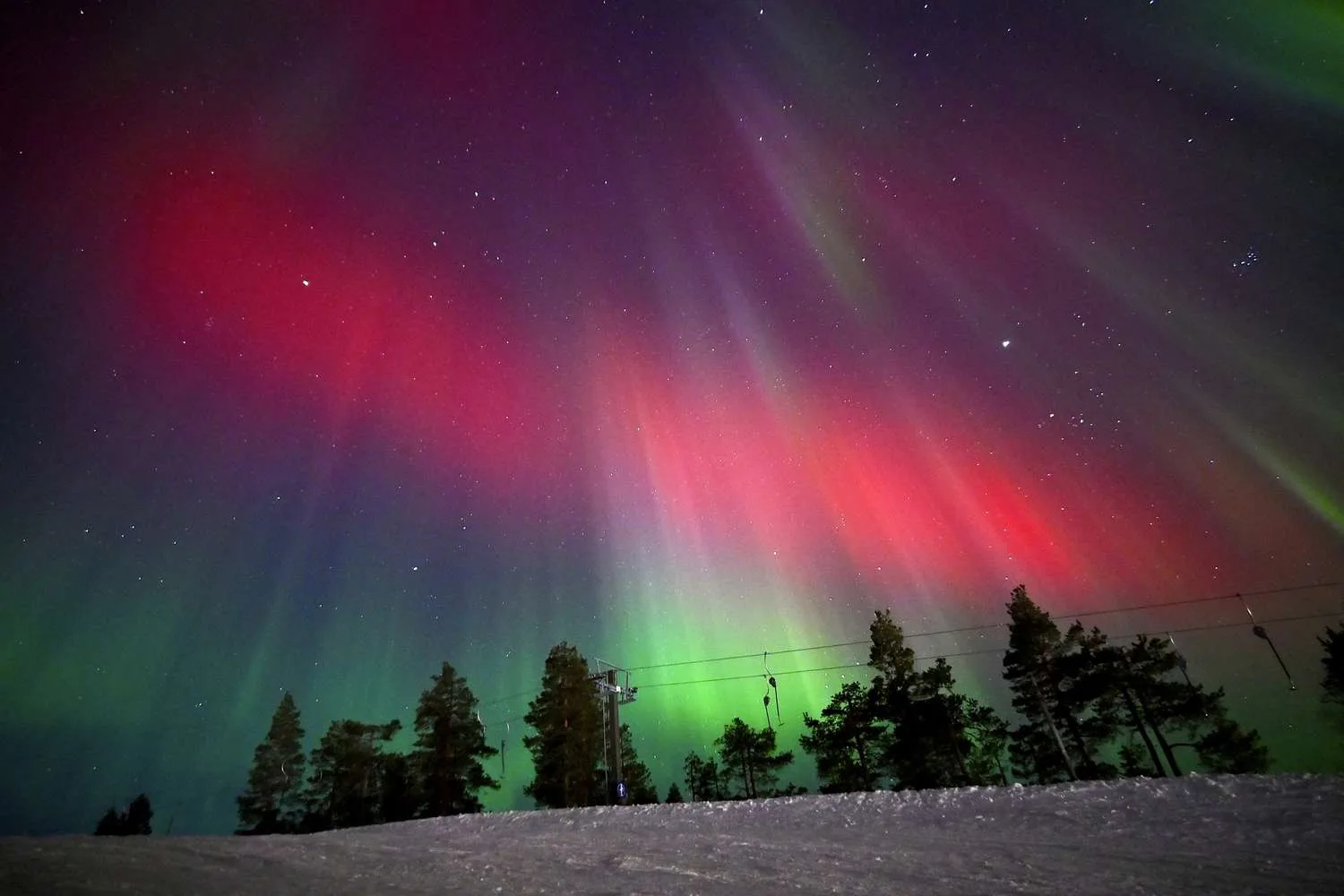
Understanding the Forecast for the Northern Lights Tonight
Stargazers are looking upward to see if the northern lights tonight will make a surprise appearance following recent solar activity. Charged particles from the Sun are interacting with Earth's upper atmosphere, creating anticipation for potential evening displays.
Coronal mass ejections occurred between Sunday, Oct. 11, and Tuesday, Oct. 13, sending massive clouds of magnetic fields and charged particles toward our planet. While NOAA indicated these arrivals could influence conditions, current projections suggest overall activity will remain below storm thresholds.
Northern Lights Forecast and Visibility Windows
According to the latest meteorological expectations, the strongest three-hour Kp forecast sits at a quiet-to-unsettled 2.67. This level typically falls short of the G1 or G2 geomagnetic storm conditions required to push auroral waves far to the south. However, because space weather can be unpredictable, brief displays remain a possibility.
For those hoping to catch a glimpse, the peak forecast window spans from 11 p.m. to 2 a.m. ET. High northern latitudes such as Alaska and far northern Canada offer the most favorable opportunities. Additionally, portions of the upper Midwest and northern states stretching from New York to Idaho could experience faint activity if skies remain dark and clear.
Tips on Watching and Photographing the Aurora
Because weaker geomagnetic events produce subtle atmospheric waves, viewers should seek locations far away from urban light pollution. Allowing eyes sufficient time to adjust to total darkness is essential for spotting faint glowing ribbons.
- Move away from bright city lights and find an open horizon.
- Monitor real-time space-weather updates and NOAA tracking maps.
- Use smartphone night mode or long-exposure settings, keeping the device completely steady with a tripod for the best photographs.
As solar-wind measurements continue arriving, real-time conditions may shift throughout the evening hours, making it worthwhile to periodically check the night sky.
Sources: People.com, Forbes, The Sunday Guardian.