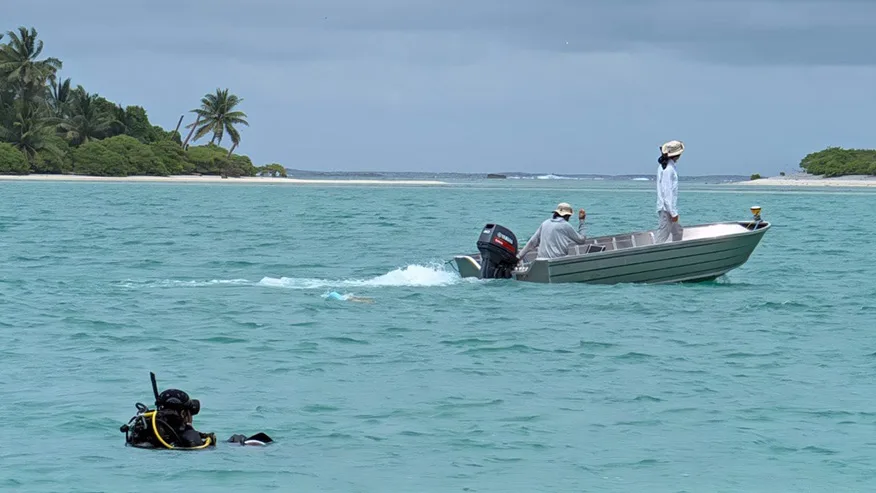
Underwater Survey Begins in South Pacific
An international team featuring researchers from Purdue University has commenced an underwater survey to investigate an intriguing anomaly in the South Pacific. The collaborative effort focuses on a feature known as the Taraia Object, which researchers hope might be linked to the disappearance of aviation pioneer Amelia Earhart.
Exploring the Castaway Hypothesis
The expedition centers on Nikumaroro, a remote atoll in Kiribati, to test the castaway hypothesis. This theory suggests that Earhart and her navigator, Fred Noonan, landed on the uninhabited island after disappearing in July 1937 during their attempt to circumnavigate the globe. Purdue University maintains a historical link to the flight, as the Purdue Research Foundation originally funded the Lockheed Electra aircraft.
Advanced Scanning and Onshore Technology
During the first day of fieldwork, the maritime archaeology crew utilized side-scan sonar and a magnetometer to scan the lagoon floor. While the magnetometer detects ferrous metals like steel cabling from the aircraft, the sonar assists in locating objects buried beneath sediment. Additionally, the team successfully established a solar-powered technical system onshore to monitor local weather and tidal patterns continuously.
Next Steps in the Investigation
Expedition leaders note that it remains too early to draw definitive conclusions as data gathering continues. Future phases of the investigation plan to incorporate tools like hydroprobes and water induction dredges to clear sediment from identified targets, while the 17-person crew continues to manage severe weather challenges and field logistics.
Sources: Purdue University, cristinaiglesias.com, CBS News.