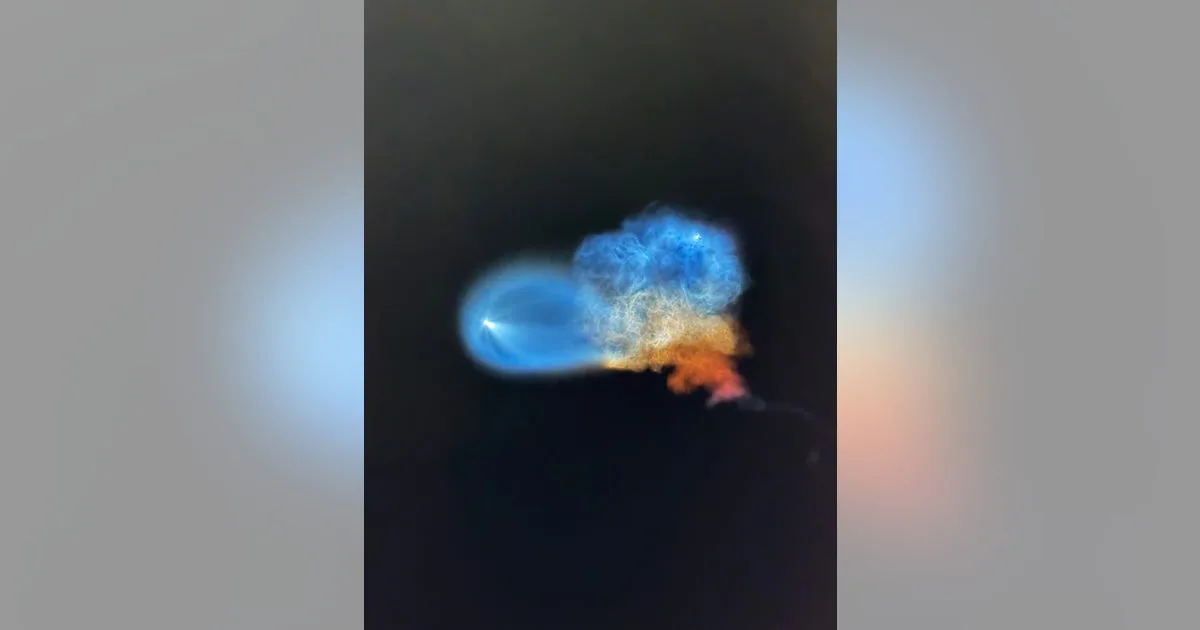
A predawn spacex rocket launch falcon 9 lifted off on Tuesday, creating a bright, jellyfish‑like cloud that lit up the dark sky for dozens of Bay Area observers.
Why the "space jellyfish" appeared
The effect occurs when a rocket climbs high enough to intersect sunlight while the ground remains in twilight. Sunlight reflects off the expanding exhaust, producing a luminous cloud that resembles a jellyfish against the night backdrop. Atmospheric conditions such as humidity and cloud cover influence whether the display is visible.
Details of the Falcon 9 launch today
The vehicle was a Falcon 9 booster tasked with the CRS-35 cargo resupply flight to the international space station (ISS). While the launch site was not disclosed in the source report, the mission aligns with SpaceX’s regular schedule of ISS deliveries.
Historical context of glowing plumes
NASA has documented similar visual phenomena during earlier SpaceX launches. When launch timing coincides with predawn or twilight lighting, the exhaust plume can become illuminated, producing a striking visual effect. However, these occurrences are not part of any planned observation program and are considered incidental.
What remains unknown
- Neither NASA nor SpaceX had forecasted the jellyfish display for this particular flight.
- Visibility is highly dependent on the exact launch trajectory, atmospheric weather, and precise timing of sunrise.
Implications for future missions
While the phenomenon is visually impressive, it does not affect the technical performance of the launch or the cargo delivery to the ISS. Observers may look for similar displays during future predawn launches, but they should not expect them as a regular feature.
Public reaction and media coverage
Local residents reported the glowing cloud on social media, prompting several news outlets to publish photos and explanations. The event has been dubbed a "space jellyfish" by observers and highlighted as a reminder of the interplay between human technology and natural lighting conditions.
Sources: FOX 13 Tampa Bay, WFLA, NASA (.gov).