Competition Winner Captures Emotional Elephant Moment
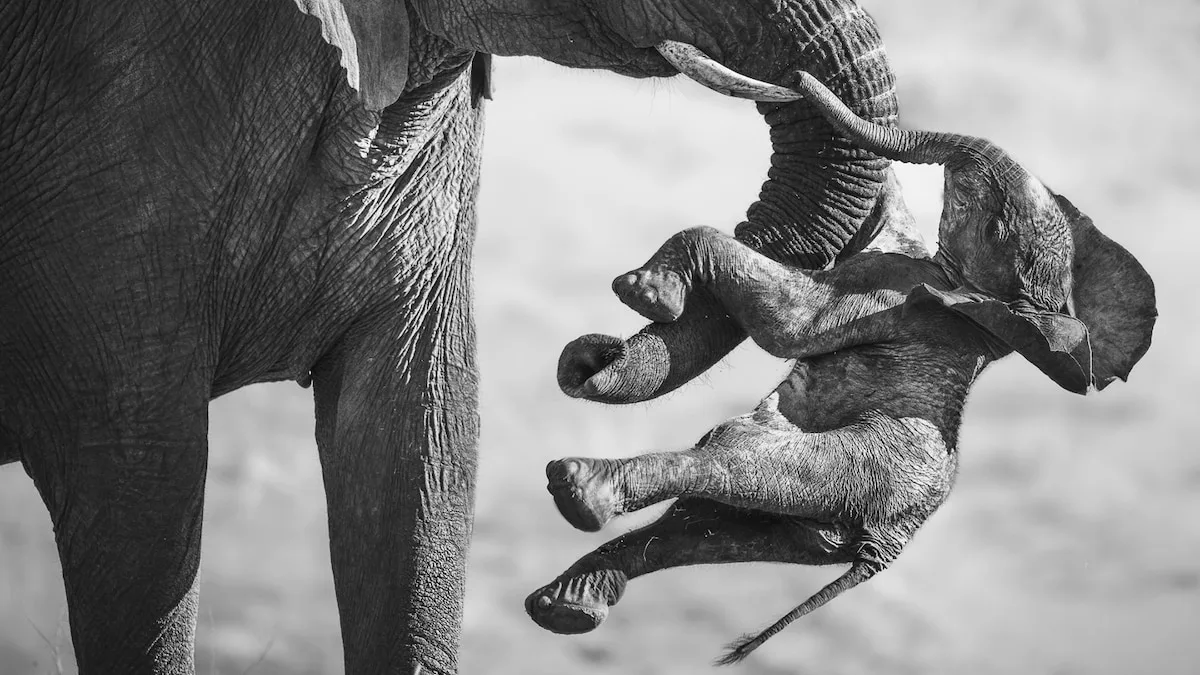
London's Natural History Museum has announced the winner of the 61st annual competition, honoring a poignant image submitted by a leading wildlife photographer. Federico Veronesi secured the grand title with a striking portrait titled 'The Aftermath,' which documents complex animal behaviors in Namibia.
Veronesi was tracking a group of elephants in a dry riverbed when he noticed unusual drag marks in the sand. Upon catching up with the herd, he discovered a female elephant carrying a dead calf. The competition's judges selected the portrait for providing a challenging yet impactful insight into animal behavior, emerging from a record-breaking pool of 65,403 entries submitted across 121 countries and territories.
Insights Into Wildlife Photography and Animal Behavior
The field of wildlife photography often reveals hidden dimensions of animal cognition and emotion. Competition chair Kathy Moran noted that Veronesi's winning piece serves as poignant proof of animal emotion. Researchers pointed out that the female elephant had lost a previous baby years ago and has since been observed interacting with other dead calves, indicating a complex emotional response to loss.
Other category victors included American photographer Loren Elliott, who won the Photojournalist Story Award for documenting resident coyotes near San Francisco, and Sitaram Raul, who triumphed in the invertebrates category by capturing a Buthacus scorpion burrowing in the Thar Desert. Additional category winners featured work ranging from underwater perspectives of polar bears by Audun Rikardsen to ultraviolet imaging of bonnet mushrooms by Agorastos Papatsanis.
Conservation Goals and Future Impact
Veronesi presented his winning image in black and white to deepen the visual connection between the animal and the viewer. Through this approach, he hopes to encourage the public to view elephants as individuals, ultimately helping to shape positive conservation decisions and our broader relationship with nature.
Sources: National Geographic, The Guardian, BBC.