

Scientific Study Reveals How the NASA Artemis Ii Launch Affected the Atmosphere
A recent pre-print study indicates that thenasa artemis ii mission generated massive atmospheric disruptions during its lunar journey.
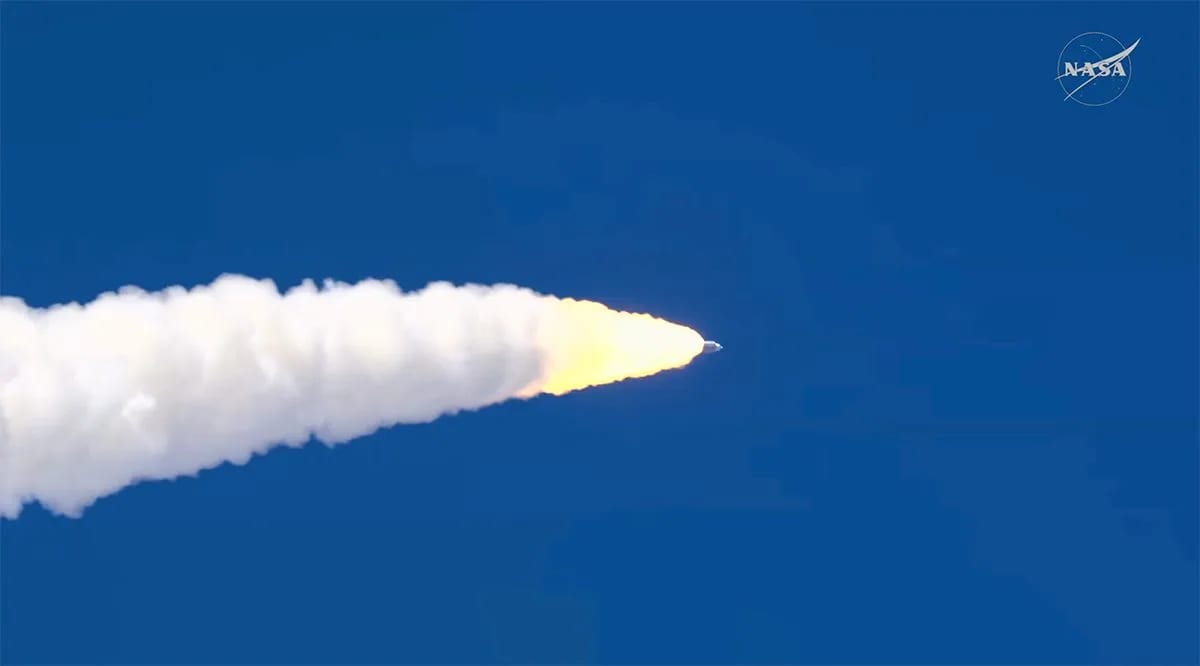
A recent scientific investigation has shown that the historic launch of nasa artemis ii triggered massive and unprecedented disturbances in Earth's upper atmosphere. Researchers found that these upper-stage engine burns and liftoff generated stronger atmospheric ripples than any prior space flight.
Launched on April 1, 2026, the mission carried four astronauts on a nine-day voyage around the Moon and back. While the flight was celebrated as a major milestone for crewed space exploration and NASA's long-term lunar goals, a pre-print study published in Geophysical Research Letters documented significant repercussions for Earth's ionosphere.
Atmospheric Disturbances and Rocket Burns
Scientists from National Cheng Kung University in Taiwan analyzed the impact of the spacecraft's trajectory. They recorded three distinct instances of ionospheric disruption occurring over the same geographic region during sequential orbit manoeuvres.
The initial liftoff from Kennedy Space Center created shock-acoustic and gravity wave modulations. However, the subsequent upper-stage engine activations proved substantially more powerful. An hour after leaving the pad, an apogee raise burn designed to increase altitude triggered shock waves that stretched across North America over a 50-degree longitude span. Roughly 25 hours into the flight, a third major disturbance emerged from the trans-lunar injection burn.
Potential Impacts on GPS and Technology
Although the initial liftoff did not cause widespread navigation failures, investigators warn that future heavy rocket launches could present challenges. Changes recorded in the ionosphere might interfere with radio signals, potentially affecting Earth-based technologies that rely on precise positioning systems, such as drones and self-driving cars. The study's authors emphasize that as powerful space missions become more frequent, monitoring these atmospheric boundary layers will remain vital for protecting global communications.
Sources: BBC Sky at Night Magazine, USA Today, WUSA9.
Frequently asked questions
When did the Artemis II mission launch?
What caused the disturbances in Earth's atmosphere?
How many astronauts were on board?
Could future rocket launches affect GPS?
Related stories

TRAI Launches Network Anubhav Platform to Map Connectivity and Curb Spam
The Telecom Regulatory Authority of India has introduced an interactive geospatial portal to help consumers check mobile and broadband network quality.

Astronomers Study the Mysterious Beta Pictoris 93 Billion Mile Feature
Researchers are investigating a massive cosmic structure located 63 light-years away in a nearby star system.

Amazon Prime Uber Eats Partnership Offers $0 Delivery for Members
Amazon Prime members can now order Uber Eats meals through Amazon with no delivery fee on qualifying orders, saving up to $175 a year.

New Proposals and Changes Surrounding Federal Student Loan Policy
Recent political changes and new legislative proposals are sparking fresh discussions regarding federal student loan repayment plans and interest rates.