
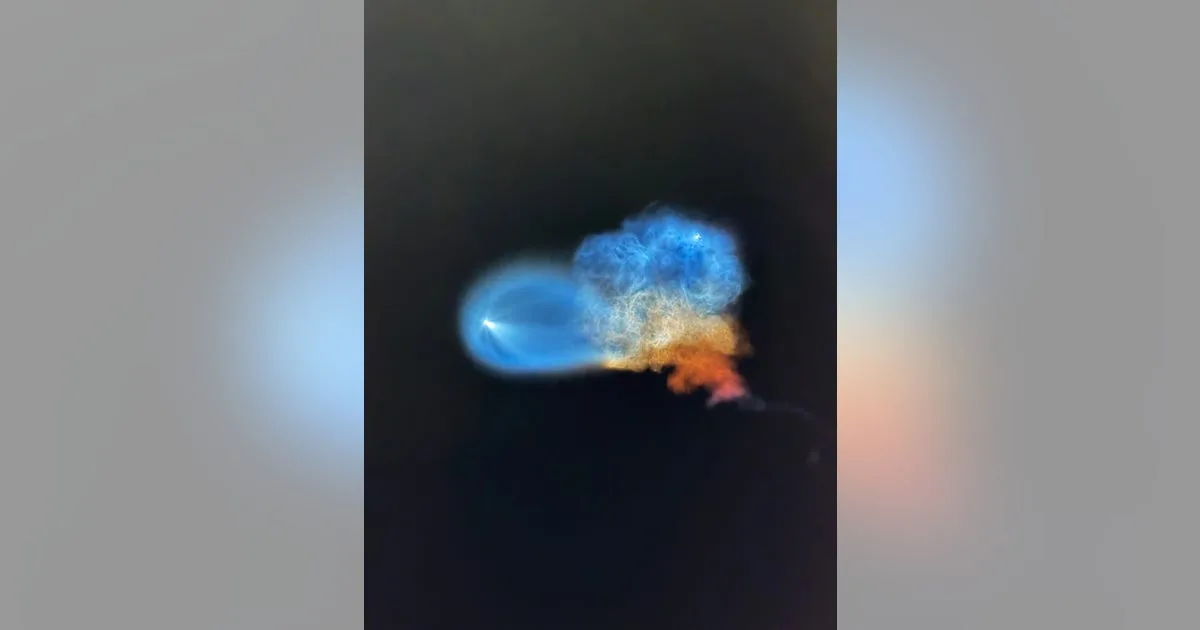
A SpaceX launch early on October 13, 2026 lit the pre‑dawn sky over the Bay Area with a striking glow. Dozens of observers reported seeing a bright, jellyfish‑like cloud that formed as sunlight struck the rocket’s exhaust plume.
Spacex launch creates visible “space jellyfish” effect
The display occurred because the vehicle rose high enough to intersect sunlight while the ground remained in darkness. When the sun’s rays hit the expanding gases, they produced a vivid, illuminated cloud that stood out against the night sky.
How the phenomenon forms
This type of atmospheric plume is only visible when three conditions align: the rocket’s altitude, the angle of sunlight, and clear atmospheric conditions. If any of these factors differ, the glowing effect may not be seen.
Mission background
The launch was part of the CRS‑35 cargo mission, a routine resupply flight for NASA. Although the mission’s primary goal was to deliver supplies, the visual side‑effect was not part of the official briefing. NASA and SpaceX have documented similar occurrences in past launches when timing coincided with sunrise or twilight.
Public response and observations
Residents across the Bay Area shared photos and videos of the phenomenon, describing it as a “space jellyfish” drifting across the horizon. The effect sparked interest on social media and prompted local news outlets to cover the event.
What comes next
Future launches may produce comparable displays if launch windows are scheduled around dawn or dusk. However, officials caution that the occurrence is unpredictable and depends on real‑time weather and lighting.
For more details on the visual impact of this launch, see the related coverage here.
Sources: FOX 13 Tampa Bay, WTAE, WKMG.