

Why WhatsApp Functionality on Election Day Raises Concerns
Experts examine the risks if WhatsApp goes dark or experiences automated account suspensions during critical election operations.

Understanding the Risks to WhatsApp During Elections
Much of Israel's election infrastructure and organizational operations rely heavily on whatsapp, creating vulnerabilities to automated blocking and potential interference. Observers have raised questions regarding what happens if WhatsApp goes dark on election day, as sudden account suspensions could paralyze critical get-out-the-vote efforts and communication channels.
Automated Enforcement and Election Surges
On election mornings, campaign workers, local branches, and political parties naturally ramp up activity by sending numerous messages, forming new groups, and contacting unfamiliar numbers. Although this is standard campaign behavior, Meta's automated enforcement systems monitor frequency and group creation to detect spam or fraud. Consequently, normal campaign intensity can easily be misidentified as suspicious behavior.
The Danger of Coordinated False Reporting
Because the platform utilizes end-to-end encryption, the parent company does not ordinarily inspect private message contents. Instead, it relies heavily on user reports to flag rule violations. This safety mechanism leaves room for abuse, as malicious actors can coordinate false reports alleging severe violations—such as incitement or illicit material—to wrongfully trigger bans against political opponents.
Deep Integration Into Public Infrastructure
Over time, local organizations, public institutions, emergency services, businesses, and civil society have organically integrated the messaging platform into their daily routines. Estimates from the Israel Internet Association indicate that approximately 99 percent of Israeli adults use the application. Political organizations and even the Central Elections Committee depend on it to coordinate volunteers, transport arrangements, and polling station observers.
Past Incidents and Global Precedents
Documented disruptions highlight that these concerns are grounded in historical events. Previous years saw targeted malicious reporting against protest activists, simultaneous bans affecting multiple members of Knesset, and unexplained waves of account suspensions. Similar global technical errors have also been acknowledged in countries like India and Indonesia. While standard review processes typically take up to 24 hours, analysts emphasize that a 24-hour delay renders standard customer service procedures ineffective during the critical hours of an election.
Sources: The Israel Democracy Institute, Daily Nation, The Times of Israel.
Frequently asked questions
Why might WhatsApp accounts be suspended on election day?
How do end-to-end encryption and user reports affect moderation?
How widespread is WhatsApp usage for official coordination in Israel?
What is the typical timeframe for a WhatsApp account review?
Related stories

Club386 Launches Worldwide Sapphire Radeon RX 9060 XT Giveaway
A new worldwide hardware giveaway features a bundle with a Sapphire graphics card, AMD processor, and motherboard.
TRAI ने दूरसंचार क्षेत्र में आर्टिफिशियल इंटेलिजेंस के उपयोग के लिए नए नियम जारी किए
भारतीय दूरसंचार नियामक प्राधिकरण ने टेलीकॉम सेक्टर में आर्टिफिशियल इंटेलिजेंस के सुरक्षित उपयोग के लिए नए दिशा-निर्देश और मसौदा प्रस्ताव पेश किए हैं।

HMD Launches New नोकिया Flip Phone Designed for Families
HMD has introduced a new clamshell-style device featuring emergency tools and family assistance capabilities.
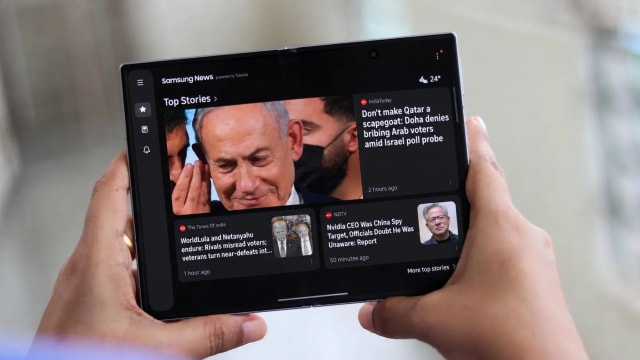
Samsung News App Discontinued 2026: Shutdown Details Revealed
Samsung has announced plans to shut down its built-in news aggregation service across Galaxy phones and tablets by December 2026.