New Discoveries in Fast Radio Burst News
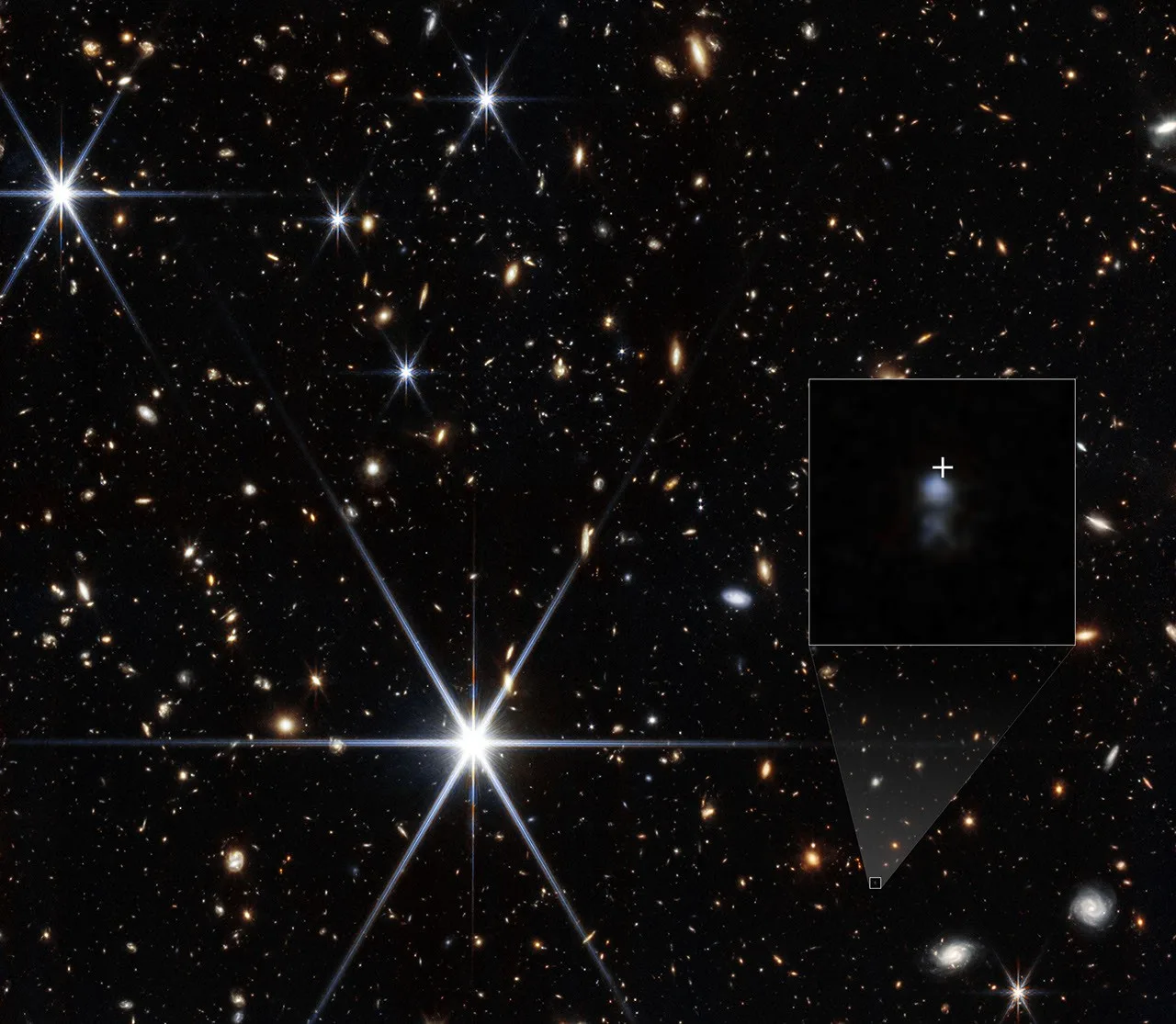
Astronomers have used NASA's James Webb Space Telescope to pinpoint the host galaxy of the most distant fast radio burst seen to date. This latest fast radio burst news reveals a signal that traveled for billions of years to reach Earth from the early universe.
First discovered in 2007, fast radio bursts are millisecond-long flashes of radio emission. Because most are observed only once and never again, their precise origins remain uncertain. The recent signal, designated as FRB 20240304B, was initially detected on March 4, 2024, by the MeerTRAP team using the MeerKAT telescope.
Uncovering the Host Galaxy
Initial radio data indicated that the burst was exceptionally distant. While ground-based telescopes could not spot a galaxy at the precise coordinates, NASA's James Webb Space Telescope successfully used its Near-Infrared Camera to detect the host galaxy.
Further analysis using the telescope's Near-Infrared Spectrograph provided a precise redshift measurement of 2.148. This corresponds to a time approximately 3 billion years after the big bang, placing the event during a peak period of star formation known as cosmic noon.
Implications for Cosmic Origins
Researchers discovered that the host galaxy was a small dwarf galaxy actively forming stars, which was much less massive than expected for typical FRB host galaxies. This finding challenges certain theories regarding the origin of these events.
While one theory suggests that fast radio bursts originate from merging neutron stars, such a process typically takes billions of years and associates with older galaxies. The presence of this burst in a younger dwarf galaxy points away from a merger origin, offering new clues about these mysterious cosmic flashes.
Sources: NASA Science (.gov), BBC Sky at Night Magazine, The Independent.